Mining Jobs Australia 2026: FIFO Roles Paying $180K+ (No Degree)
If you’ve been scrolling through social media lately, you’ve probably seen those videos of regular people making absolute bank working in the Australian outback. We are talking massive paychecks, free food, and weeks off at a time. Welcome to the world of FIFO in 2026. The crazy thing? You definately do not need a fancy university degree or massive student debt to get a slice of this pie. Right now, there are entry-level and experienced roles paying $180K and above, simply because the industry is desperate for people who are willing to put in the hard yards.
But lets be real for a second. It’s not just driving a big truck and collecting a massive paycheck while listening to podcasts. It is hard work, long hours, and you are away from your family. But if your looking to set yourself up financially, buy a house, or just escape the 9-to-5 grind in the city, getting into a FIFO (Fly-In, Fly-Out) role might be the best decision you ever make. In this guide, I’m going to break down exactly what these high-paying jobs are, how you can get them without stepping foot in a university, and what it takes to survive the lifestyle.
What Exactly is a FIFO Job and Why is it Booming in 2026?
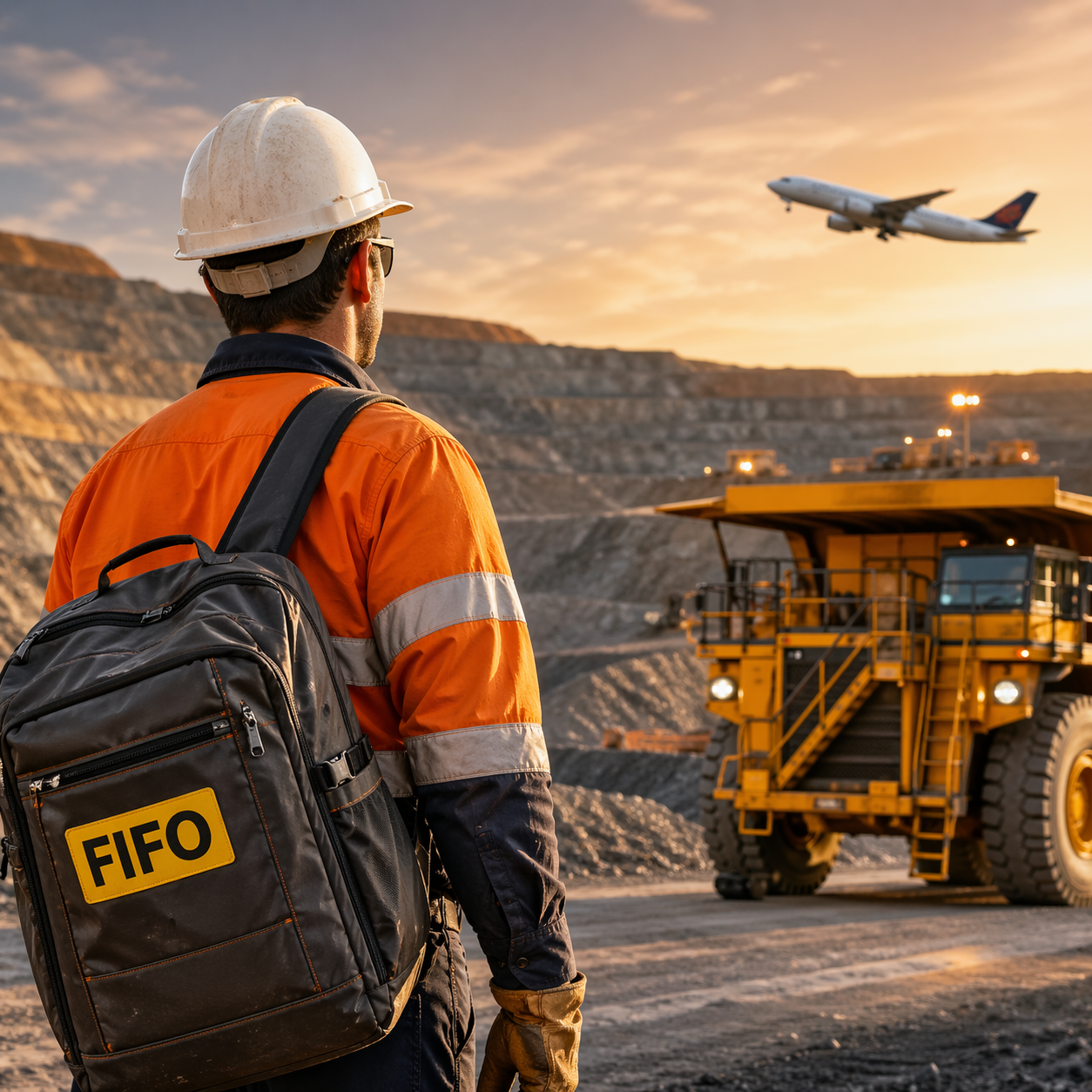
FIFO stands for Fly-In, Fly-Out. Because most of Australia’s richest mineral deposits—like iron ore, gold, lithium, and copper—are located in the absolute middle of nowhere (think the Pilbara in Western Australia or the Bowen Basin in Queensland), mining companies can’t just hire locals. There aren’t any locals. So, they fly workers in from major cities like Perth, Brisbane, or Adelaide, put them up in a mining camp for a set roster, and then fly them back home when their shift is done.
Why is 2026 such a massive year for this? Well, the transition to green energy has sent the demand for critical minerals like lithium, cobalt, and copper through the roof. On top of that, traditional iron ore and coal are still pumping. The mining companies are making billions, but they have a massive bottleneck: they literally do not have enough hands on deck. This means wages have skyrocketed, and companies are dropping their strict experience requirements just to get warm bodies into seats.
A typical roster might be 2 weeks on, 1 week off (2/1), or if your lucky, 8 days on, 6 days off. During your “on” time, you are working 12-hour shifts in blistering heat. But during your “off” time, your completely free. No taking work home with you. And the best part? While your on site, your accomodation, flights, and food are 100% paid for. You can literally save 80% of your income if you play it smart.
Top FIFO Roles Paying $180K+ (No Degree Required)
Alright, let’s get into the good stuff. What are these magic jobs that pay doctor salaries to people with high school diplomas? Here are the top roles you should be looking at if you want to crack that $180,000+ mark in 2026.
1. Heavy Rigid (HR) Dump Truck Operators
When people think of mining jobs, this is usually what comes to mind. You are driving a truck the size of a two-story house, hauling hundreds of tonnes of dirt and rock out of a pit. Surprisingly, this is one of the most accessible jobs for beginners, especially women, who are highly sought after in these roles because statistics show they are easier on the expensive machinery.
The Pay: Trainees start around $100K – $120K. But once you have 12 to 18 months of experience and move to a production role with a major contractor, your base rate plus site allowances and production bonuses can easily push you past $160K, and senior operators on tough rosters are easily clearing $180K.
How to get it: You don’t need a degree, but you absolutely need a manual car license and preferably an HR (Heavy Rigid) truck license. Many people pay for a 2-day HR license course out of pocket to make their resume stand out. Just remember, it can get mind-numbingly boring driving in circles for 12 hours a day, so you need to be good at staying alert.
2. Driller Offsiders (The Toughest Job in the Industry)
If you want to make serious cash fast and you have the physical fitness of an athlete, Driller Offsider is your golden ticket. But warning: this job is brutal. An offsider is the assistant to the driller. Your job is to manually load and unload heavy drill rods, mix muds, and keep the rig running in 40-degree heat. It is physically exhausting, dirty, and dangerous.
The Pay: Because the turnover rate is incredibly high (alot of people quit in the first week), the pay is insane. A green (new) offsider can make $130K. Once you survive a year, you start getting meter bonuses. A good offsider on a good rig pulling deep holes can easily crack $180K to $200K. If you step up to become the actual Driller, your looking at $250K+.
How to get it: Fitness is everything here. You need to pass a very strict functional capacity evaluation (FCE). Having a First Aid ticket, an HR license, and a White Card is usually all you need to get hired. They just want people who wont quit when it gets hard.
3. Underground Miners (Nipper / Bogger Operator)
Underground mining pays significantly more than surface (open-cut) mining because, well, your working in a dark, hot tunnel deep under the earth. It is not for anyone who is claustrophobic. You usually start as a “Nipper,” which is basically an underground delivery driver and general helper. From there, you train up to drive a “Bogger” (an underground loader).
The Pay: Nippers start around $120K. Experienced Bogger Operators or Jumbo Operators (the guys who drill the tunnels) make astronomical money. A good Bogger operator easily clears $180K, and Jumbo operators are known to make $300K+ on contract rates.
How to get it: It’s harder to get straight underground without surface experience, but not impossible in 2026. You need your standard tickets, a strong safety mindset, and usually, you have to know someone or get lucky with a greenhorn intake program.
4. Shotfirer (Explosives Expert)
Things need to be blown up before they can be dug out. That is where shotfirers come in. They are responsible for storing, transporting, and setting off the explosives in the mine pit. It sounds like an action movie, but it is actually a highly technical, math-heavy, and incredibly safety-focused job. One mistake can literally be fatal, so the stress levels can be high.
The Pay: Due to the high risk and the strict licensing required, shotfirers are very well compensated. Experienced shotfirers routinely make between $170K and $200K+ depending on the site and the company.
How to get it: You can’t just walk into this job. You usually start as a blast crew member (which still pays around $120K) where you are literally just shoveling dirt and carrying hoses. After putting in your time and proving your not an idiot, the company will sponsor you to get your Shotfirer’s License.
5. High Risk Trades (Riggers & Scaffolders)
If you are already working in construction in the city as a rigger or a scaffolder, transitioning to mining is a no-brainer. The mines are constantly building, expanding, or maintaining massive processing plants. Scaffolders build the platforms, and riggers guide the cranes lifting hundreds of tonnes of steel.
The Pay: With site allowances and massive overtime, an advanced rigger or scaffolder on a FIFO shutdown roster can easily earn over $180,000 a year. Shutdowns are when they turn off the plant for maintenance, and you work crazy hours for 3-4 weeks straight.
How to get it: You need your High Risk Work Licenses (Basic, Intermediate, or Advanced Rigging/Scaffolding), Working at Heights, and Confined Space tickets. If you have these, recruiters will literally be calling you non-stop.
The Reality of the FIFO Lifestyle (It Is Not For Everyone)
Okay, so the money sounds amazing, but lets talk about the reality. I see so many young guys and girls jump into this thinking its a paid holiday. It is not. You will miss birthdays, weddings, and anniversaries. The isolation can really get to you. You spend half your life living in a donga (a small transportable room with a bed, fridge, and TV) in a dusty camp with thousands of other tired workers.
Mental health is a massive issue in the FIFO industry. The combination of shift work, bad sleep, being away from loved ones, and the high-pressure environment can lead to burnout. On top of that, there’s the “golden handcuffs” trap. People start making $180K, so they buy a brand new $100K Landcruiser, a jet ski, and take out a massive mortgage. Then they realize they hate the job, but they can’t quit because they have massive debt to pay off. If you do this, be smart. Live below your means, invest the money, and have an exit strategy for 3 to 5 years down the track.
On the flip side, the camps in 2026 are getting way better. Because companies are fighting to keep workers, the facilities are insane. We are talking Olympic-sized swimming pools, state-of-the-art gyms, tennis courts, and buffet dining halls that serve everything from roast dinners to custom stir-fries every single night. And since you aren’t paying for rent, groceries, or petrol while your there, your bank account grows very quickly.
Tickets You Need to Get Your Foot in the Door
If you are serious about making the jump, you need to prepare your resume. Mining companies use automated software to scan resumes, so if you don’t have the right keywords or tickets, a human will never even read it. You don’t need a degree, but you do need certifications. Here is the absolute baseline of what you should spend your money on before applying:
- White Card: Mandatory for working on any construction or mine site in Australia.
- First Aid / CPR: Shows you are safety conscious.
- National Police Clearance: Most big companies require this. A clean record is crucial.
- Manual Driver’s License: Essential. An HR (Heavy Rigid) license is even better and highly recommended.
- Working at Heights & Confined Space: Not mandatory for driving trucks, but if you want to be a nipper, rigger, or general offisider, these are essential.
You will also need to pass a very strict medical exam. This includes hearing tests, lung capacity tests, a back assessment, and a very strict drug and alcohol screen. The mining industry has a zero-tolerance policy. If you like to party with illegal substances, this is not the industry for you. They do random testing on site all the time, and if you fail, you are on the next flight home and blacklisted.
Where to Apply and Get Started
Getting your first break is the hardest part. You will probably apply for 100 jobs and get 99 rejections. Do not let it discourage you; that is just how the game works. The best way to start is by looking for “Traineeship” or “Greenhorn” intakes. Massive companies like BHP, Rio Tinto, and Fortescue run these programs a few times a year. However, they are highly competitive.
A faster route is going through labour-hire agencies. Companies like WorkPac, Hays, and Programmed supply contract workers to the big mines. They are always desperate for people, and while you might not get the same exact benefits as a permanent employee right away, it gets your foot in the door. Once you have 6 months of experience on a mine site, you are golden, and you can write your own ticket to the high-paying roles.
If you want to start browsing the actual jobs available right now and see the requirements for yourself, the best place to start your journey is on the official Australian job board. Setup job alerts for “FIFO Entry Level” and apply to everything you see.
Get started and view current official listings here: Seek Australia – Official Mining Jobs
To wrap things up, the 2026 mining boom is a genuine opportunity to change your life financially. Yes, its tough, and yes, it requires sacrifices. But if your willing to work hard, stay safe, and be smart with your money, those $180K+ roles are sitting there waiting for you, no degree required. Just update that resume, get your tickets sorted, and start applying. Good luck out their!